Russia Winter Drive
Chasing the Northern Lights
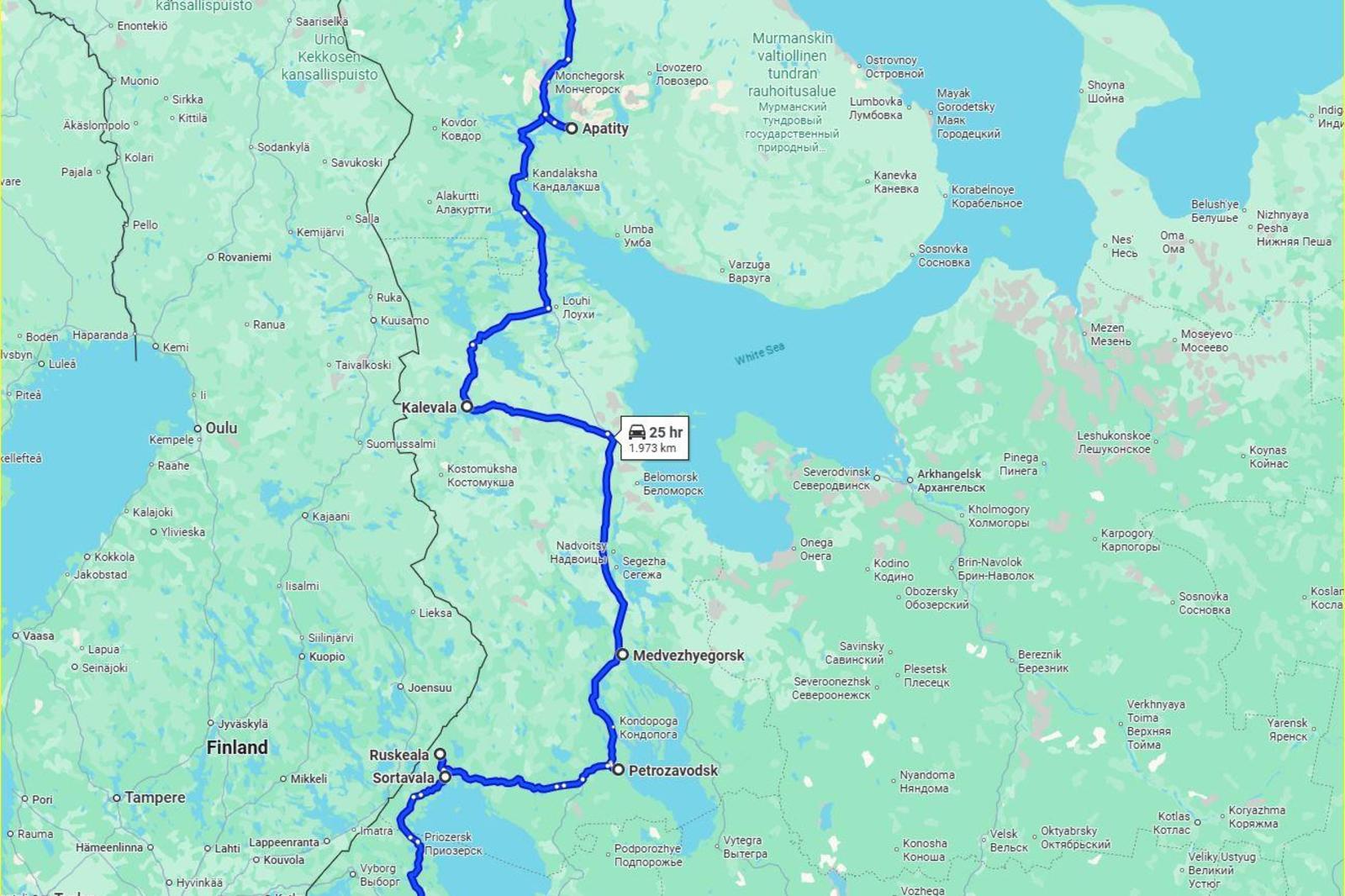
St. Peterburg – Sortavala – Ruskeala Mountain Park – Petrozavodsk – Kizhi Island – Medvezhyegorsk – Belomorsk – Kalevala – Apatity – Avrora Village – Teriberka – MurmanskThe Russian Arctic calls you. Explore the wild beauty of the Kola Peninsula, where winter reigns for 8 months, and the White & Barents Seas meet. Raw, remote, and endlessly captivating. The North is pure magic.
Route: St. Petersburg – Murmansk, 2300km
11 days / 10 nights

11 Days, 10 Nights, Endless Memories
- Duration: 11 days / 10 nights, Driving distance: 2300 km
- Types of driving: 60% paved roads, 40% backroads and forest trails
- Type of tour: Self driving tour, Group size: from 6 to 20 persons
- Vehicles: Great Wall Motor Tank
- Accommodation: Best hotels on the route.
- Meals: Full board + coffee-breaks
- Ruskeala Mountain Park, Karjala Park complex is a unique tourist base
- Kizhi Museum Reserve
- St.Petersburg - the City of Tsars,
- Osudareva doroga (the Czar's road)
- Teriberka, the Northern lights, frozen sentry and the ship graveyard
- Snow activities
- Snowmobiling
- Cross-country skiing
- Dog sledding, Horse sledding,
Itinerary
Arrival to St.Petersburg. Pick-up at airport or railway station arrivals hall. Transfer to the hotel, check-in.
Panoramic tour of the city (3-4 hrs). Explore the most significant landmarks of Russia’s Northern Capital. Our shrewd guide will be happy to take you around the historic sights and share some entertaining details of the city's history and present-day life.
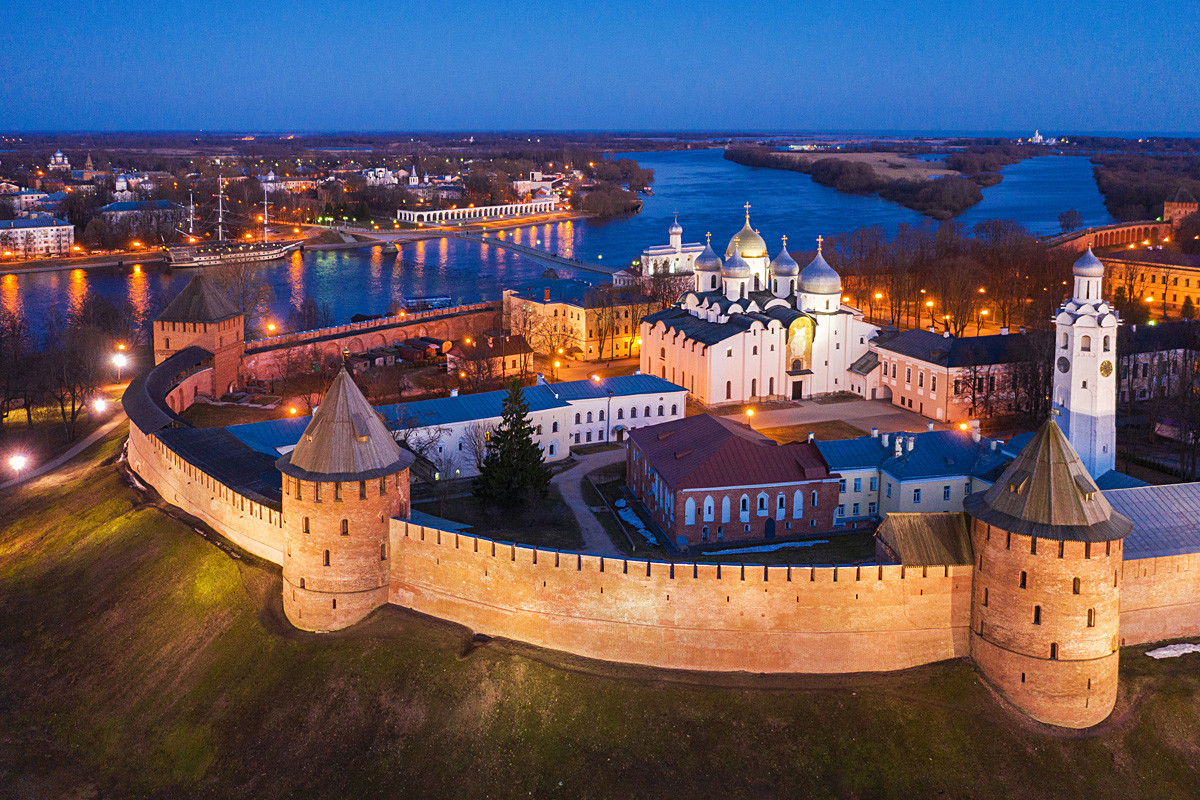
The 2.5 mile Nevsky Prospect is adorned with Russian History. Time to make the multiple iconic photos in front of the gorgeous Winter Palace, admire the breath-taking bridges and impressive St.Isaac’s and Kazan Cathedrals, view the whimsical Zinger Building, marvel at the extravagant Church on the Spilled Blood.The Russian Museum, the Admiralty, the elegant Spit of Vasilyevsky Island, the formidable Peter and Paul Fortress – Saint Petersburg surely has it all to blow the guests away!
OPTION: Visit the Hermitage (up to 2 hours). You can be absorbed by Hermitage ‘s treasures for days and still come out wanting more. The enormous collection (over three million items, only a fraction of which are on display in 360 rooms) almost amounts to a comprehensive history of Western European art.
Welcome dinner in the evening to meet the crew and talk some details of the road trip ahead.
Accommodation in a hotel (Meals: -/-/-)
Our morning starts with an introduction to our SUVs. We conduct a short briefing, and then our journey begins! We leave the city and adjust to driving in the convoy and interacting with each other on the radio.
Heading to Karelia, we will ride along the Ladoga Lake – the largest freshwater lake in Europe – enjoying marvellous views. This section of the route will allow us to get comfortable with the cars, and maybe drive to shore of the lake while we explore the elegant Karelian forests and forest backroads on our SUVs.
Highlight of the day is Ruskeala Nature Reserve – a definitive must-see location!
The marble extracted in the Ruskeala quarry since the 1600s was widely used for decoration of palaces, churches and even some metro stations in St.Petersburg. The quarry was closed in 1985 and later officially recognized as a cultural heritage site.
Operated by a private travel company since 2005, The Ruskeala Mountain Park offers a walk around the flooded quarry, zip-lines, visit to underground caves. We take a walk around the artificial lakes of the flooded quarry, see the monuments of industrial architecture, enjoy the magnificent winter scenery with a coffee from a neat kiosk.
In the evening, we will arrive at our hotel, hidden in the woods on the bank of a charming pond.
Accommodation in a hotel (Meals: B/L/D)
This morning we leave Sortavala to head on to the enchanting city of Petrozavodsk.
We visit a fabulous place hidden on a river bank in thick Karelian woods - a Siberian Husky kennel. Meet the playful energetic Huskies and experience the speedy sledding – both absolutely delightful. Learn how to harness a sled, and experience how amazingly fast the team of these dogs can go.
We will have lunch around a fireplace in a traditional Northern chum (tent) and enjoy a local band playing ethnic instruments.
Our day trip finishes in Petrozavodsk, the capital of Karelia region. Among the town's landmarks are the outdoor statues of Emperor Peter I and Gavrila Derzhavin (the governor of the region in the late 1700s century, but vastly known in Russia as a poet).
The appealing waterfront promenade on the Onega Lake invites for a leisurely stroll.
Accommodation in a hotel (Meals: B/L/D)
Today we embark on a trip with a ‘khivus’ (hovercraft) for a slide along the smooth ice surface of Lake Onega to Kizhi Island. This ride takes about 1.5 hours.
Wooden architecture can be found throughout Russia, but Kizhi Island boasts some of the nation's most famous and most intricate pieces. Masterpieces of church architecture, including the famous Transfiguration Church with 22 domes, and unique iconography (for example, the “Savior All-Merciful” the “Judgement Day” pieces created in the 1500s and the late 1700s respectively).
Traditional loghouses (up to 3 stories high) and household items created in Karelian, Veps and Russian villages over the centuries are all to be found here. Most of these structures from various times (the oldest one is believed to date back to 1300s) are local, but some were carefully collected and transported to the island to be preserved and displayed for the public.
After a fascinating tour of the museum grounds, we return to Petrozavodsk to enjoy dinner at one of the city’s coziest restaurants.
Accommodation in a hotel (Meals: B/L/D)
We leave Petrozavodsk to see more of the marvels Karelian wilderness has to offer. After breakfast, we head north. Our path will go along the coast of the Onega Lake, parts of it on back roads, with a bunch of stops along the way to capture the magnificent landscape.
One the interesting stops on our way will be the Kivach Falls. Translated from Finnish as "powerful, impetuous”, the name fully reflects the soul of the 10.7-meter high waterfall located on the Suna River. It had been even more powerful before a hydroelectric power plant was built 30 km up the river. We continue further on to Girvas, the 3 billion year old volcano crater, currently almost obliterated by the river. The very picturesque petrified lava flows in the drained channel of the Suna are still clearly visible.
We are now passing some of the key points of the enormous project of the 227-kilometer long White Sea–Baltic Canal constructed in 1931-33 to enhance the strategic transportation options in the north-western regions of the USSR.
By evening, we reach a comfortable hotel in Segezha, on the shore of yet another of the great Karelian lakes.
Accommodation in hotel (Meals: B/L/D)
Today we leave North Karelia and reach the Kola Peninsula. Entering the Arctic will be a fascinating journey through the absolutely deserted terrain. Which is especially felt in winter, when everything around is covered with snow. A rare tourist rides here. This is where the true adventure starts.
After lunch, our brave convoy heads to Kirovsk, passing Apatity. The name of the city stems from the phosphate ores mined in this area.
During World War II, the village of Apatity was responsible for food production for the region, since the Kola Peninsula itself was cut off from the country. Just imagine the agricultural work carried out in these conditions, involving the entire able-bodied population.
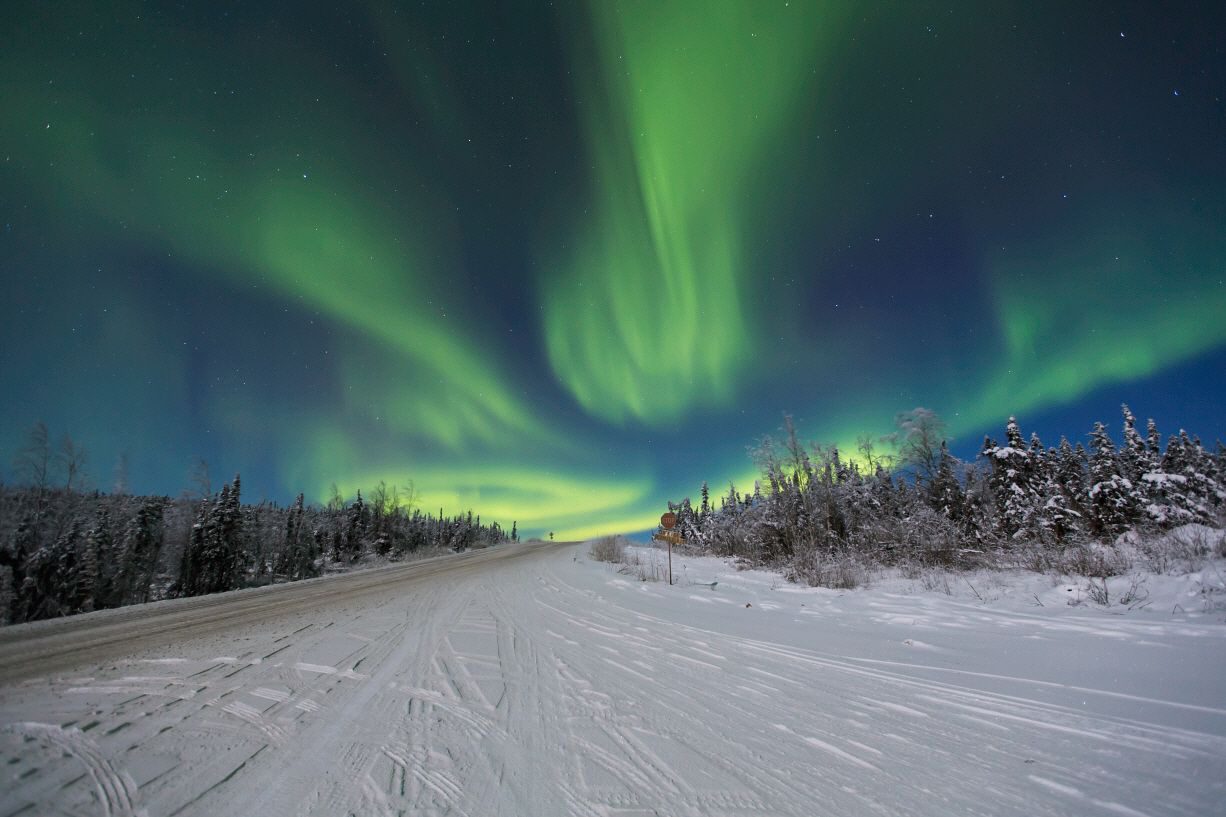
This is the closest place to St. Petersburg tourists come to in order to see the Northern Lights. Latitude here already allows for the unique natural phenomenon to be observed.
The Lapland Biosphere Reserve - the largest natural park in the European part of Russia with a huge number of reindeer living in the wild – is located 30 km from Apatity. Moose, brown bears, wolverines, martens and wolves can also be found here.
We reach the hotel by evening and hope that luck strikes today and we can see the Aurora!
Accommodation in cottages (Meals: B/L/D)
We won’t be rushing anywhere today, but the day will be full of activities. We are staying in the very center of the Khibiny range in Kirovsk and explore the vicinity with our SUVs. The difficult terrain will challenge our driving skills on some nice patches.
We will also visit the Snow Village – a huge labyrinth made under the snow with beautiful wall carvings and ice sculptures made by artists from all over the Arctic region. Illuminated with colored lights, its halls and caves carry us into a fantastic world of winter fairytales, where Father Frost (the Russian Santa Claus) and Snow Maiden welcome their guests.
Located at the foot of Mount Kukisvumchorr and Yuksporr, the city is both the northernmost mountain ski area in Europe and one of the nerve centers of PhosAgro, the mining giant that extracts phosphates in the neighbouring regions.
It’s exactly the place to enjoy the most exciting snowmobile rides, and we shall absolutely take advantage of that!
Options to pick for the day: snowmobiling, alpine skiing, snowboarding.
Accommodation in a hotel (Meals: B//L/D).
We start driving towards towards Murmansk along the Kola highway in the morning.
We may be able to visit a settlement of the local indigenous Sami people: see the traditional tent houses, take photos in ethnic clothes and even pay tribute to the pagan idols! Locals takes us around their territory, share stories about their culture and history and introduce us to the wonderful animals of the North: reindeer, elk and polar foxes. Feeding reindeer from your own hands is an incredible experience!
Naturally, reindeer sledding is on the list as well.
Lunch with traditional courses on the menu.
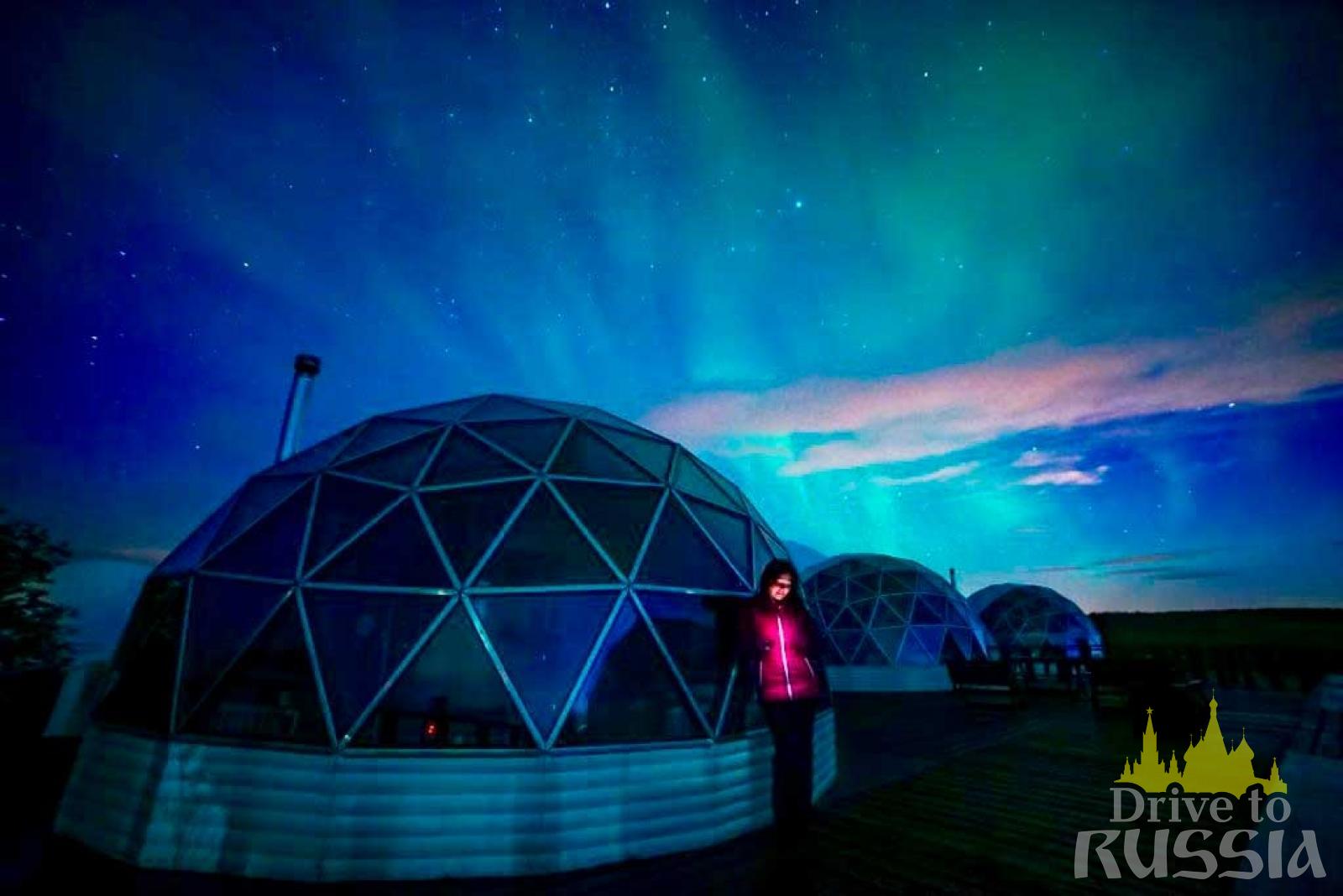
We’ll be spending the night at a cozy hotel located outside of Murmansk. Situated very conveniently close to a large lake, Lapland Village offers a number of comfortable cottages that allow you to see the birth of the Northern Lights outside the city lights and enjoy the magnificent dancing colors in a fluffy bed (or on the deck outside).
We settle down, have a nice dinner, and set ourselves up for the most beautiful impressions.
Accommodation in glamping cottages (Meals: B/L/D).
Today we set off to the literal edge of the earth, the village of Teriberka, located on the shore of the Arctic Ocean. The 2-hour drive across the snowy desert of the tundra to suddenly arrive at a sandy beach washed by peaceful waves (remember, the Barents Sea doesn’t freeze?) is a pretty surreal experience.
PLEASE NOTE: given the unpredictable weather conditions of the region, we reserve the possibility of the road to Teriberka being blocked by heavy snowfall.
Once a fisherman’s village, Teriberka looks somewhat abandoned now. Still, life here does not fade away thanks to the tourists who come here in winter to contemplate the North radiance, while different festivals are held here in summer. It has also become an internationally recognized center for kitesurfing with camps, festivals and trainings.
If time allows, we’ll pay a visit to the Dinosaur Eggs beach – famous for its huge and perfectly round boulders, very similar to eggs from dinosaur nests in their size and in appearance. Another impressive place is the cemetery of abandoned ships, where a wooden skeletons stick out of the water like ghosts, reminding us of their glorious past.
Discard all the perishing traces of civilization, the harsh northern nature remains. Smooth hills passing into the steep rocky coast of the Arctic Ocean stretching beyond the horizon. The piercing silence broken by the rare cries of gulls and gusts of wind. The cold reigns here.
Not to worry, we can warm ourselves in our cozy SUVs and head back to our snug cottages!
Accommodation in glamping cottages (Meals: B/L/D).
The end of our amazing journey is close, but the adventure continues.
Today we explore Murmansk, the most populated city in the Arctic and one of the largest ports in the world within the Arctic Circle, as the Barents Sea never freezes due to the Gulf Stream reaching here. Just a bit over 100 years old, Murmansk is located right on the rocky coast.
A city with a rich history and memory of the war. We’ll visit the impressive 42-meter tall Alyosha monument - a stone soldier facing west, toward the Valley of Glory, where the fiercest fighting of the Arctic Campaign occurred when the German invaders were turned back from the approaches to Murmansk in 1941. The hill where the monument stands also offers spectacular views of the harbour.
We have also have planned a tour of “Lenin”, the first nuclear-powered icebreaker in the world, that is currently a cultural heritage entity. Over 500 Soviet factories and scientific labs took part in the creation of this engineering marvel. Commissioned on December 3, 1959, it provided navigation on the Northern Sea Route over the next 30 years. It also served as a “nuclear university”, where the personnel for the nuclear-powered fleet gained experience during the year-round Arctic navigation. Lenin has traveled 654,400 nautical miles, more than three times the distance from the Earth to the Moon, helping thousands of ships on their way through the ice of the Arctic.
We will have dinner at one of the best restaurants in the city, exchanging our impressions of the tour and watching a slideshow of pictures and videos taken along the way.
Accommodation in a hotel (Meals: B/L/D)
Today the long journey ends with a warm goodbye at the airport in Murmansk!
🌍 What’s Included in Your Journey
- The cost includes:
- Rent of GWM Tank 300 specifically designed for driving tours.
- One vehicle for 3-4 guests
- Support car with all the necessary equipment
- Mechanic-instructor
- English-speaking guide
- Accommodation: best hotels on the route in the city center
- Meals: 3 times a day,
- Route preparation - including off-road part
- Sightseeing
🚫 What’s Not Part of the Package
- Single supplement
- Early check-in
- Accommodation and meals not indicated in the program
- Additional activities and services, such as snowmobile rides
- Strong drinks
- Personal expenses
- Tips
- International and domestic flights
Everything You Need to Know
Everything you need to know about the roads, Russian traffic police, rules and requirements.
The road system and traffic rules in Russia aren’t dramatically different from other European countries. Still, driving in Russia can be a frustrating experience, with drivers having to comply with lengthy traffic jams, poor road maintenance and random police inspections.
Who can drive in Russia?
If you stay in Russia for less than six months, you can use your foreign driver’s license with a Russian translation. When driving, you must present an International Driving Permit (IDP) along with your foreign license, or another officially certified Russian translation.
According to Federal Law No. 196-FZ of 10.12.1995“On Road Traffic Safety”, Article 25:Clause 14 states that foreigners are allowed to drive in Russia using an international driver’s license together with their national driver’s license.Clause 15 specifies that foreign licenses not meeting Russia’s international treaty requirements (e.g., licenses from countries like India and China, which have not joined the Vienna Convention on Road Traffic of 08.11.1968) are valid only with a certified Russian translation or if the license is already in Russian.
Therefore, licenses from countries not party to the Vienna Convention must have an official Russian translation to be valid in Russia.
You also need to meet the minimum legal driving ages as set out by Russian road law: 18 for cars and 16 for motorcycles. You won’t be able to start driving in Russia below this age, even if you have a foreign license already.
Requirements for driving in Russia
The State Inspection for the Safety of Road Traffic (GIBDD) is Russia’s traffic police division, although many people still call it by its old name – the GAI. When driving in Russia, random vehicle stops are common for checking that you’re carrying the appropriate documents and that they’re up to date.
Russia operates a zero-tolerance for drinking policy. Alcohol checks are most common on weekends and Monday mornings; if you fail a test, you’ll need to give a blood sample. You are required by law to carry the following items at all times:
- Warning triangle: compulsory on board all motor vehicles.
- Headlight beam deflectors: depending on your car, you will either need deflector stickers or have to adjust the beam manually.
- First aid kit and fire extinguisher: compulsory in all motor vehicles.
- Spare light bulbs
- Motorcyclists: helmets are compulsory when riding on a scooter or a motorcycle
You should also carry your Russian driving licence or international driving permit, proof of auto insurance in Russia, passport and proof of vehicle ownership. If you fail to carry these items you could face a fine.
Traffic rules in Russia
Some of the key things you need to know:
- You must drive on the right-hand side of the road, overtake on the left.
- Using your mobile when driving is illegal (without a hands-free kit).
- Turning right at a red light is only allowed if separate arrow-shaped green light permits it.
- It is prohibited to turn left in large towns other than at crossings with lights.
- Crossing a solid double white line is illegal.
- It’s illegal to drive a dirty car.
- Priority: traffic coming from the right has priority at roundabouts, unless otherwise signposted. Priority must be given to convoys of vehicles and to emergency vehicles using flashing lights. Trams and buses also have right of way.
- Towing: It is advisable to draw up an inventory of the contents of a trailer or caravan, although not required.
- Seat belts: mandatory for the driver and any passengers.
- Only use the horn in towns if there is immediate danger.
- Travelling with children: it is prohibited to carry a child less than 12 years of age in the front seat of a car when there is no special child restraint. It is also prohibited to carry a child less than 12 years of age on the rear seat of a motorcycle.
- Driving is on the right side of the road
- The minimum age to drive a car is 18
- Wearing of seat belts is mandatory in both front and back seats
- Speaking on a mobile phone while driving (without a handsfree device) is a serious offence
- Crossing a solid double white line is forbidden
- Turning right at a red light is not allowed when there is no special green arrow traffic light
- It is illegal for children under the age of 12 to travel in the front seat
- Picking up hitchhikers is illegal
- Dipped headlights must be used during the day
- It is illegal to drive a dirty car, especially with mud on the licence plates fines for this range from R.800 to R.2,000
- A minimum of third-party insurance is compulsory
General speed limits in Russia
Speed limits vary depending on the vehicle you’re driving in Russia and the area you’re driving in.
For motorcycles and cars under 3.5 tonnes, the limits are generally 60km/h in built-up areas, 90km/h on highways and 110km/h on expressways and other roads.
Larger vehicles and those with trailers, however, can only drive at up to 90km/h on expressways and 70km/h on other roads.
In some residential areas, there is a 20 km/h speed limit for all vehicles. This should be clearly signposted.
Anti-radar equipment which interferes with specific radio frequencies to jam police signals is prohibited.
Types of Visas
Electronic Visa – Key Information
According to Federal Law No. 114-FZ dated 15.08.1996 “On the procedure of exit and entry into the Russian Federation”, Article 25.16-1:
- The Unified Electronic Visa (E-Visa) grants the right to enter and stay in the Russian Federation for the purposes of a guest or business visit, as well as for tourism.
- The E-Visa is issued to citizens of foreign countries whose list is determined by the Government of the Russian Federation.
- Foreign citizens must apply for the E-Visa through a specialized website of the federal executive authority responsible for foreign affairs, accessible via the Internet.
- The processing time for the E-Visa does not exceed four calendar days from the date of application submission.
- The E-Visa is a single-entry visa valid for 120 calendar days from the date of issue, allowing a maximum stay of 30 days in Russia from the date of entry.
The E-Visa is issued to citizens of certain countries, including India and China, according to Government Decree No. 2571-r dated 06.10.2020 “On the list of foreign states whose citizens are issued the Unified Electronic Visa.”
Applying for a Russian Electronic Visa for Foreign Tourists:
- Quick and simple application: Filling out the online form via the official federal website takes only a few minutes with an intuitive interface.
- Requirements: Valid foreign passport with at least 6 months validity and one blank page, digital passport-sized photo, valid bank card for the consular fee, active email address for notifications.
- Process: Submit personal details and trip information (including accommodation address), upload documents, pay the fee, and send the application.
- Processing time: 4–7 days; occasionally longer if additional checks are needed.
- Maximum stay: Up to 30 days (including arrival and departure days).
- Purpose of visa: Tourism, business, and humanitarian activities (scientific, cultural, sociopolitical, sports).
- Entry points: Major airports (Sheremetyevo – SVO, Pulkovo – LED, Vnukovo – VKO), selected seaports, and land border crossings.
Recommendations:
- Apply as soon as the trip is confirmed.
- Regularly check email for visa status updates.
- Present the electronic visa together with the passport upon arrival.
For most travellers a tourist visa (single- or double-entry, valid for a maximum of 30 days) will be sufficient. If you plan to stay longer than a month, you can apply for a business visa or – if you are a US citizen – a three-year multi-entry visa.
Tourist Visas
These are the most straightforward Russian visas available, but they are also the most inflexible. They allow a stay of up to 30 days in the country, with one or two entries within that time period. It is not possible to extend a tourist visa.
Russian Tourist Visa
- Your original passport with at least 2 blank visa-designated pages (passport must be valid for at least 6 months after intended departure date from Russia).
- Two copies of Russian visa application form, completed and signed.
- ONE passport-size photo signed on the back.
- If Tour Group or Cruise Passenger: Letter from tour company or cruise line confirming itinerary and including a copy of the confirmation from authorized Russian travel company which shows the reference number and confirmation number for the visa.
- If Individual Travel: Confirmation of hotel arrangements from authorized Russian travel company, or directly from the Russian hotel, showing reference number and confirmation number for the visa.
Note that Russian consulates also reserve the right to see your return ticket or some other proof of onward travel, but this is rarely requested.
Business Visas
Available for three months, six months or one year (or three years in the US), and as single entry, double entry or multiple entry visas, business visas are valid for up to 90 days of travel within any 180-day period. You don’t actually need to be on business to apply for these visas. In fact, they’re great for independent tourists with longer travel itineraries and flexible schedules. But you must have a letter of invitation from a registered Russian company or organization and a covering letter stating the purpose of your trip. Some applicants are also asked to provide proof of sufficient funds to cover their visit.
Russian Business Single, Double and Multiple-Entry Visa
Transit Visas
For transit by air, a transit visa is usually valid for up to three days. For a nonstop Trans- Siberian Railway journey, it’s valid for 10 days, giving westbound passengers a few days in Moscow; those heading east, however, are not allowed to linger in Moscow. Note that transit visas for train journeys are tricky to secure and are usually exactly the same price as a single entry tourist visa.
Invitation
To obtain a visa, everyone needs an invitation, also known as ‘visa support’ – this can be done through our travel company. The invitation is given only when booking a tour in Drive To Russia company.
Application
Invitation voucher in hand, you can then apply for a visa. Wherever in the world you are applying you can start by entering details in the online form of the Consular Department of the Russian Ministry of Foreign Affairs (https://visa.kdmid.ru/PetitionChoice.aspx).
Take care in answering the questions accurately on this form, including listing all the countries you have visited in the last 10 years and the dates of the visits – stamps in your passport will be checked against this information and if there are anomalies you will likely have to restart the process. Keep a note of the unique identity number provided for your submitted form – if you have to make changes later, you will need this to access it without having to fill the form in from scratch again.
Registration
Every visitor to Russia is obligated to have their visa registered within seven business days of arrival. If you are in Moscow for less than seven business days, you are exempt. If you leave Moscow, you must register again in any city where you stay seven days or longer. The obligation to register is with the accommodating party – your hotel or hostel, or landlord, friend or family if you’re staying in a private residence.
When you check in at a hotel or hostel, you surrender your passport and visa so the hotel can register you with the local visa office. You’ll get your documents back the next day. It is unlikely but possible that police officers may request to see your proof of registration, so keep all documentation and transportation tickets.
Frequently asked questions about a visa and how to get it
What is tourist invitation letter?
It is a document stating that you are officially invited to Russia by a Russian travel company or a hotel that is accredited by the Ministry for Foreign Affairs of the Russian Federation.
What is the difference between a tourist invitation letter and a Russian visa?
The Tourist Invitation Letter is a document that must be presented along with your visa application. It is not an actual visa, but a document that the Russian government requires for you to apply for an actual visa.
Does the invitation letter guarantee that a visa will be issued?
No, it is merely a document that allows you to apply for the actual visa. The approval of your visa will be at the discretion of the Russian government.
Can I travel to Russia with only my invitation, without a visa?
No, it is not possible. You will need a Russian Visa and the Tourist Invitation Letter allows you to apply for it.
What do i need to do after I receive the invitation letter?
After you have received you invitation, you need to go to the Russian embassy to have your interview. Before doing so, you need to find out which documents you need. We recommend you give the embassy a call before you go. After the interview, the embassy will issue your Russia visa if approved.
To enter the territory of the Russian Federation in 2020, citizens of many countries of the world need a visa. Some countries have a visa-free regime. For more information about visas, see our table. The table is being updated in accordance with changes
Cancellation Policy
*If you are an individual and have already booked a place in our fix- date program, you need to read the terms of cancellation and refund.
- 10% is non-refundable deposit, that guarantees a place in the tour. If the tour is canceled by Drive to Russia or the minimum number of people in the group is not reached, this deposit will be returned in full.
- 30% of the tour cost will be charged if the booking is cancelled at least 60 days before the start of the program.
- 50% of the tour cost will be charged if the booking is cancelled at least 30 days before the start of the program.
- 75% of the tour cost will be charged if the booking is cancelled at least 14 days before the start of the program.
- 100% of the tour cost will be charged if the booking is cancelled within less than 7 days before the start of the program. You can find the program’s booking conditions in the Booking Terms section
- If you are a tour operator or have your own individual group of at least 6 people the cancellation and refund conditions will be subject of the agreement.
- If you are an agent and sell our standard programs or fix-date programs, the cancellation and refund conditions for the groups will be subject of the agreement, the cancellation and refund conditions for individuals will be as mentioned above.
- Cancellation and refund conditions for overland tours outside of Russia are specified additionally, and are based on the rules and mandatory payments of these countries.
REFUND POLICY
- In case of cancellation, the refund will be made in 07-10 working days as per the cancellation policy, taking into account the company’s costs and bank fees incurred
- The refund will be made to the same account/mode through which transfers have been received.
- 90 days before the start of the program – 10% of the tour price (non-refundable Deposit)
- 89-75 days before the start of the program – 25% of the tour price
- 74-60 days before the start of the program – 50% of the tour price
- 59-45 days before the start of the program – 75% of the tour price
- Less than 45 days before the start of the program – 100% of the tour price
You can find the Сancellation terms and conditions in the Cancellation policy and Refund policy section
Drivers must be at least 21 years old. We expect you to be a confident and competent driver with driving experience. It is important to understand that our tours and expeditions include sections on gravel or dirt roads. Some tours even include off-road driving, but these are usually safe areas that can not damage your car, it is more for fan.
We expect our expedition members to always be prepared for the possibility that things may not go according to the plan, so you must be flexible and able to adapt to unforeseen circumstances, as well as be a good team player. We do also except you to impeccably comply with the request of the head of the expedition and listen to his advice. Remember that an expedition is always a challenge and any unexpected situations can happen on the way, which can never be predicted in advance, so you need self-control, a sense of humor and no matter what position you take in life, remember that the main leader of the group is the Head of the expedition!
our passport should have at least six months of validity after the end of your chosen tour or expedition with enough pages for stamps in it. You need to get visa in advance. If you are going to take part in one of our expeditions that pass through several countries, you should obtain the visas to these countries as well.
One of the main conditions for admitting you to a tour or expedition: you have comprehensive travel insurance, including coverage for driving a vehicle of the appropriate engine size. If you cannot prove that you have insurance, you will not be allowed on an expedition. You must ensure that you have a policy designed for adventure travel that will cover you for personal accident, medical and repatriation costs, loss, damage and theft of personal belongings and for cancellation or curtailment.
As mentioned above, one of the main conditions for your admission to the tour or expedition: you have comprehensive travel insurance, including coverage for driving a vehicle of the appropriate engine size. If you cannot prove that you have insurance, you will not be allowed on an expedition. You must ensure that you have a policy designed for adventure travel that will cover personal accident, medical and repatriation costs, loss, damage and theft of personal belongings and for cancellation or curtailment.
We advise you to obtain travel insurance immediately when booking a tour or expedition, to insure you in case you cancel your trip beforehand as well. Please remember that part of your Deposit is non- refundable, and Drive to Russia will not refund cancellation fees if you were unable to obtain travel insurance or if you canceled your trip due to an incident not covered by your insurance.
You should also make sure that you are satisfied with the amount of insurance coverage provided for cancellation or reduction, since many cheaper policies only provide insurance coverage for significantly less amount than the cost of your trip. In such cases, you should seriously consider increasing your cancellation coverage limit by paying an additional fee.
You should also keep in mind that if you have to shorten your trip for any reason, travel insurance will not cover the additional costs incurred in bringing your car home if you are traveling in your own car, and these additional costs will fall on you.
Finally, since many policies only cover medical expenses abroad, you should also consider your insurance to cover future indirect losses that you may incur in case of a serious accident or illness (for example, loss of earnings, disability, medical care, etc.).
Drive to Russia provides vehicles for all tours and expeditions that we organize, and this service is already included in the price of the tour or expedition.
We choose the best hotels along the route for all our tours and expeditions. Even although it is obviously impossible to find suitable hotels in some places, we try to design the route taking into consideration a possibility of good and comfortable accommodation. All our reservations are based on double occupancy rooms with breakfast included. If you need a single room, you should inform us in advance, as there are not enough rooms available everywhere, and the earlier we make reservations, the more guarantees that you will get what you expect.
The hotels we use on routes vary in facilities depending on their location, but in most cases are good mid-level hotels that include bathrooms and other necessary amenities. The key components are vehicle safety, cleanliness, safety, comfort and location. Sometimes we choose isolated areas of recreation centers, or cottages, in apartments or in cozy modern hotels. However, you should understand that the standards of hotels in Russia and most of the countries through which we plan our expeditions are not equivalent to the standards of Western Europe and North America.
In some cases, we use tent camps during our expeditions. In this situation, we will organize a tent camp with a minimum set of amenities; you will have a personal tent for one or two people. Shower and toilet are for general use. Dining tent provides you with simple food. But in this case, you need to have a sleeping bag and a mat. Sometimes, if allowed, we use clamshells.
We pay special attention to nutrition during the trip. But you must help us and let us know your preferences in advance. If, for example, you are a vegetarian or have some kind of intolerance, you must specify this in the application. Our program Manager pays great attention to nutrition and therefore will work out an individual menu for each such case. In recent years, we have started to practice the “buffet” approach more often, which allows each guest to choose what they prefer and enjoy their meal. But “buffet” is not possible everywhere and in this case we order food individually, paying attention to all the details and your individual preferences. Of course, when traveling to different countries, we pay great attention to the national cuisine, we try to order a variety of food, so that you can fully immerse yourself in the food culture.
Yes. Children can participate in almost all of our programs. Some short programs are designed so that they will be interesting for both children and adults. Children up to 12 years are offered discounts and we provide you with child seat, if you travel with children in our vehicles
Road Map